
On May 27, the College of International Education successfully conducted a HSK pre-exam training session for the first cohort of students of Tashkent Campus NWAFU, aiming to enhance their Chinese proficiency, and ensure their successful completion of the Chinese Language Proficiency Graduation Examination and other degree requirements. The training session was delivered by Ms. Xu Ying as the first in a series of pre-exam courses for the graduation season, targeting the first cohort of the Class of 2024 of Tashkent Campus NWAFU. Well-organized and effective, the session received high praise from the participating international students.
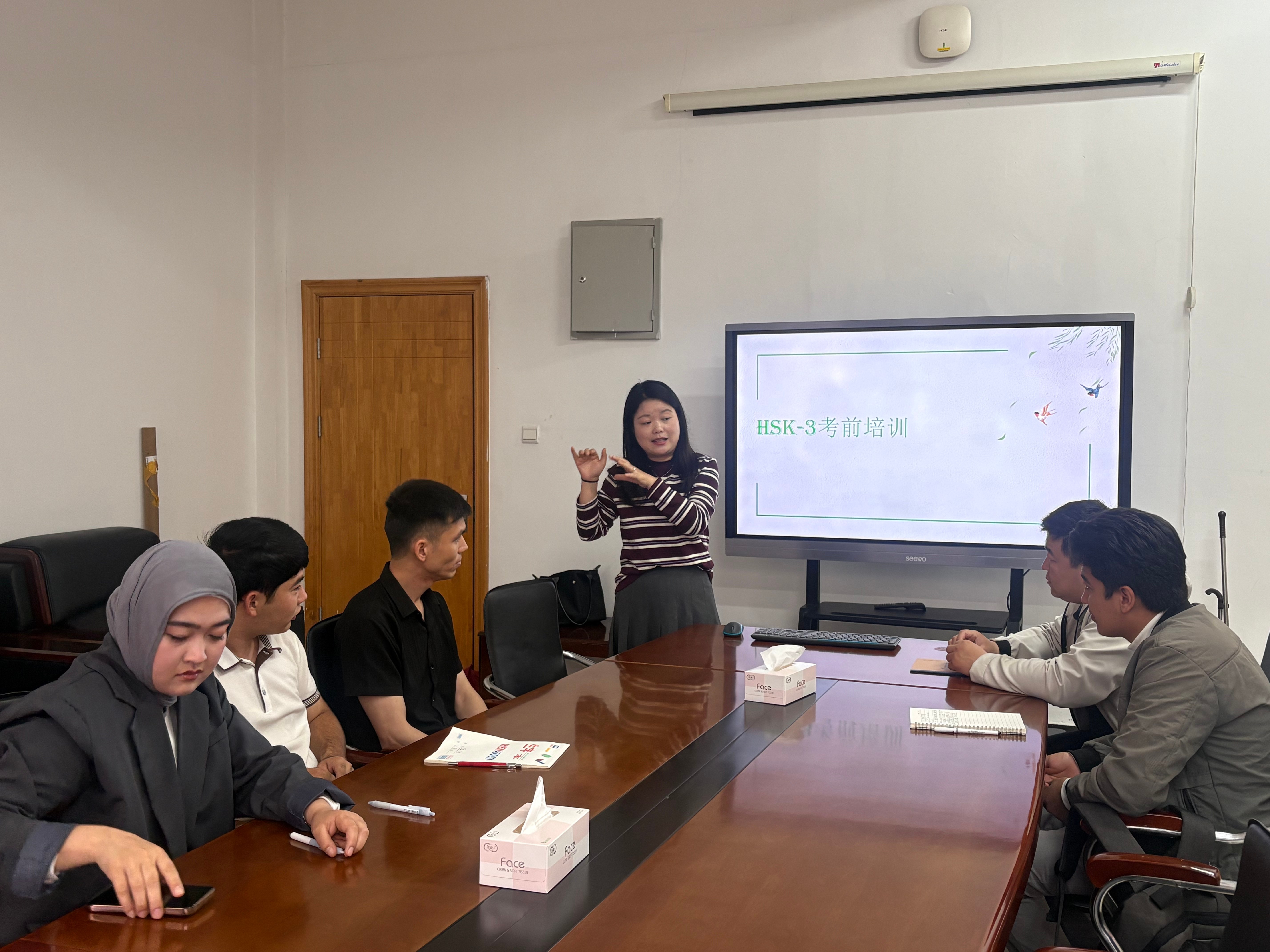
The Chinese Language Proficiency Graduation Examination is a key assessment component for the first cohort of master’s degree international students of Tashkent Campus NWAFU to successfully complete their studies. In response to the prominent challenges faced by international students during exam preparation—such as fragmented knowledge systems, weak test-taking skills, and unclear review priorities—the College of International Education, based on the students’ actual learning conditions and closely aligned with the examination standards, integrated high-quality teaching resources. It specially invited Ms. Xu Ying, an experienced instructor in Chinese language teaching and exam preparation, to develop a customized intensive training program, providing targeted empowerment and efficient support to help graduating international students prepare for the exam.
During the training, Ms. Xu Ying closely followed the exam syllabus and delivered systematic and intensive instruction on exam situation analysis, core priorities, difficult knowledge points, response standards, and test-taking techniques. Taking into account the Chinese language learning characteristics of the international students of Tashkent Campus NWAFU, the training focused on key modules such as vocabulary, reading, and writing. It broke down high-frequency test points and typical error-prone question types, and provided step-by-step explanations using real exam examples. This helped students clarify their problem-solving logic and avoid common pitfalls in answering questions. Meanwhile, targeted guidance was offered to address the students’ common learning weaknesses, demonstrating standard approaches to answering questions and helping them quickly master efficient and practical test-taking strategies.
The training session was well-organized with a strong learning atmosphere. The participating international students remained fully engaged throughout, diligently taking notes on key and difficult points, and actively taking part in interactive exchanges during the class. In response to the students’ questions and learning difficulties regarding exam preparation, Ms. Xu Ying provided detailed answers one by one, effectively addressing their pain points in preparing for the exam. Through this training session, the participating students were able to systematically review the knowledge framework for exam preparation, strengthen their Chinese language foundation, alleviate pre-exam anxiety, and gain a clearer direction and focus for their subsequent revision.
The first session of the special pre-exam Chinese language training concluded successfully. It effectively addressed the gaps in the international students’ exam preparation, significantly enhancing their test-taking skills and boosting their confidence for the exam. Going forward, the College of International Education will continue to focus on the core needs of international students in their Chinese language Proficiency Graduation Examination preparation, steadily carry out the subsequent examination arrangements, and make every effort to ensure that the first cohort of master’s international students (Class of 2024) of Tashkent Campus NWAFU successfully pass the Chinese Language Proficiency Graduation Examination and complete their academic programs.