
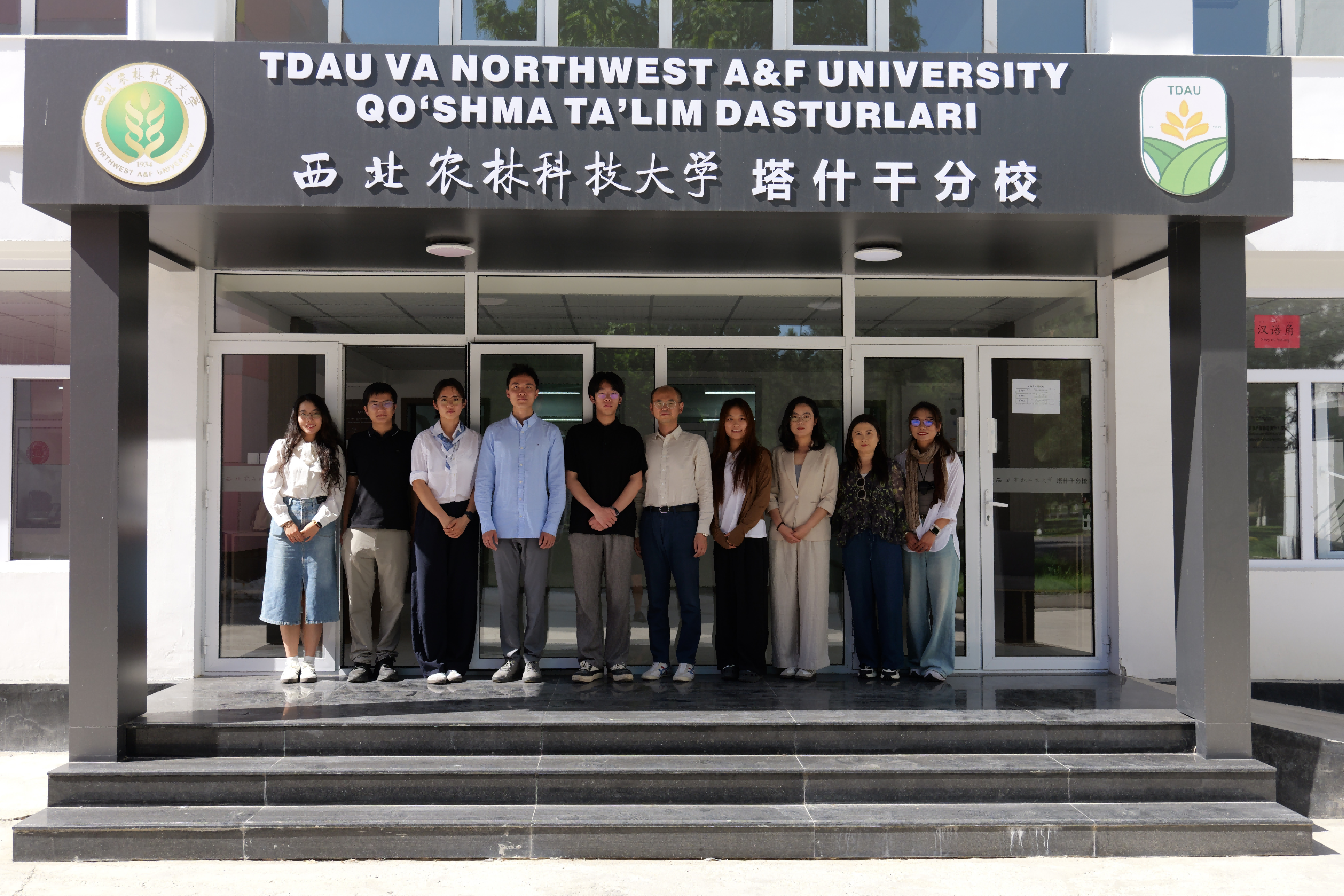
On June 13, Mr. Jin Ge, Assistant Dean of the Institute of Area Studies at Peking University, led a delegation to Uzbekistan to visit the Tashkent Campus NWAFU. The two sides held discussions on China-Uzbekistan cooperation in agricultural education and science and technology, innovation in talent cultivation models, and pathways for industry-education integration.
Postgraduate students of the “Silk Road International Agricultural Talent” program at NWAFU delivered a systematic presentation on the development history, disciplinary framework and program layout of the Tashkent Campus NWAFU, as well as its distinctive internationalized teaching and talent cultivation model. They highlighted, in particular, the Campus’s practical exploration and phased outcomes in advancing international cooperation in agricultural disciplines, cultivating interdisciplinary talents, and contributing to the Belt and Road Initiative. Jin Ge and the delegation listened attentively to the presentation, and engaged in in-depth discussions on the current state, institutional mechanisms, and future directions of China-Uzbekistan cooperation in agricultural education and science and technology.
Subsequently, the delegation conducted a field visit to the China-Uzbekistan offshore talent training base for apple industry-education integration, where they gained an in-depth understanding of the planting structure, technological application levels, industrial chain extension, as well as the key challenges currently facing the apple industry in Central Asia. The two sides held on-site discussions on topics including breeding of superior varieties, promotion of standardized cultivation techniques, integrated pest and disease management, and pathways for value addition in the industry.
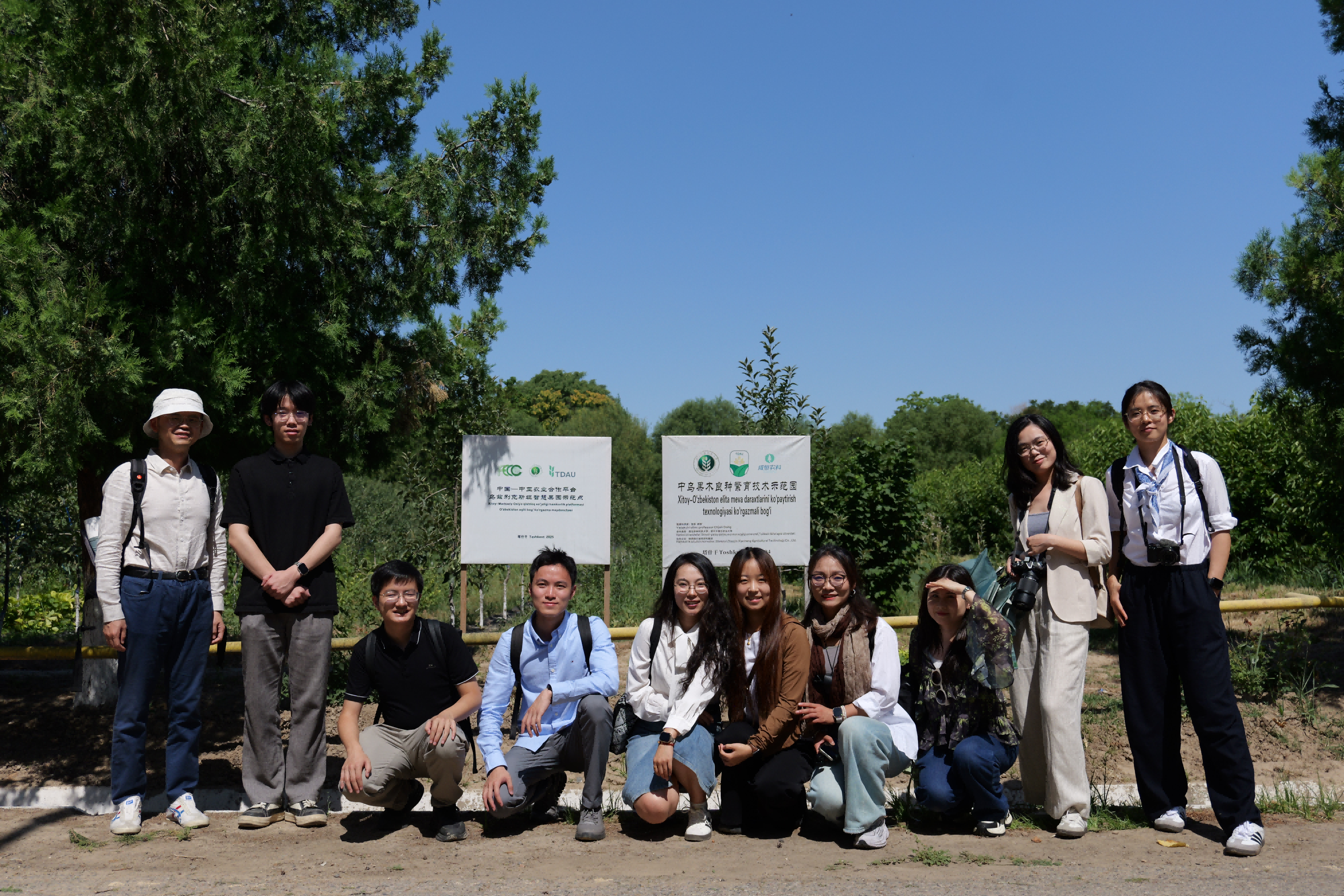
Young scholars from both universities agreed that China-Uzbekistan cooperation in agricultural education should be further advanced, evolving from traditional models of talent exchange and academic visits toward a more integrated framework of “industry-education synergy, technology-enabled empowerment, and joint industrial development.” This may be achieved through the co-establishment of research platforms and demonstration bases, so as to strengthen technology integration and the capacity for outcome commercialization. Such efforts would provide more systematic and sustainable Chinese approaches to the development of specialty agriculture and rural revitalization in Central Asia.