
On the afternoon of March 12, the Tashkent Campus successfully held an online teacher-student meeting for the 2025 cohort students. This meeting serves as a key link for the connection of education and teaching in the new semester at the campus, and also a pragmatic measure to strengthen teacher-student communication, consolidate the foundation of talent cultivation, and advance China-Uzbekistan collaborative education. Student supervisors from the specialized academic institutes, resident staff, Chinese language teachers and volunteers at the campus, Yakubov Farrukh Kamilzhanovich, Dean of the College of International Education of Tashkent State Agrarian University, as well as all students of the 2025 cohort at the campus attended the meeting.
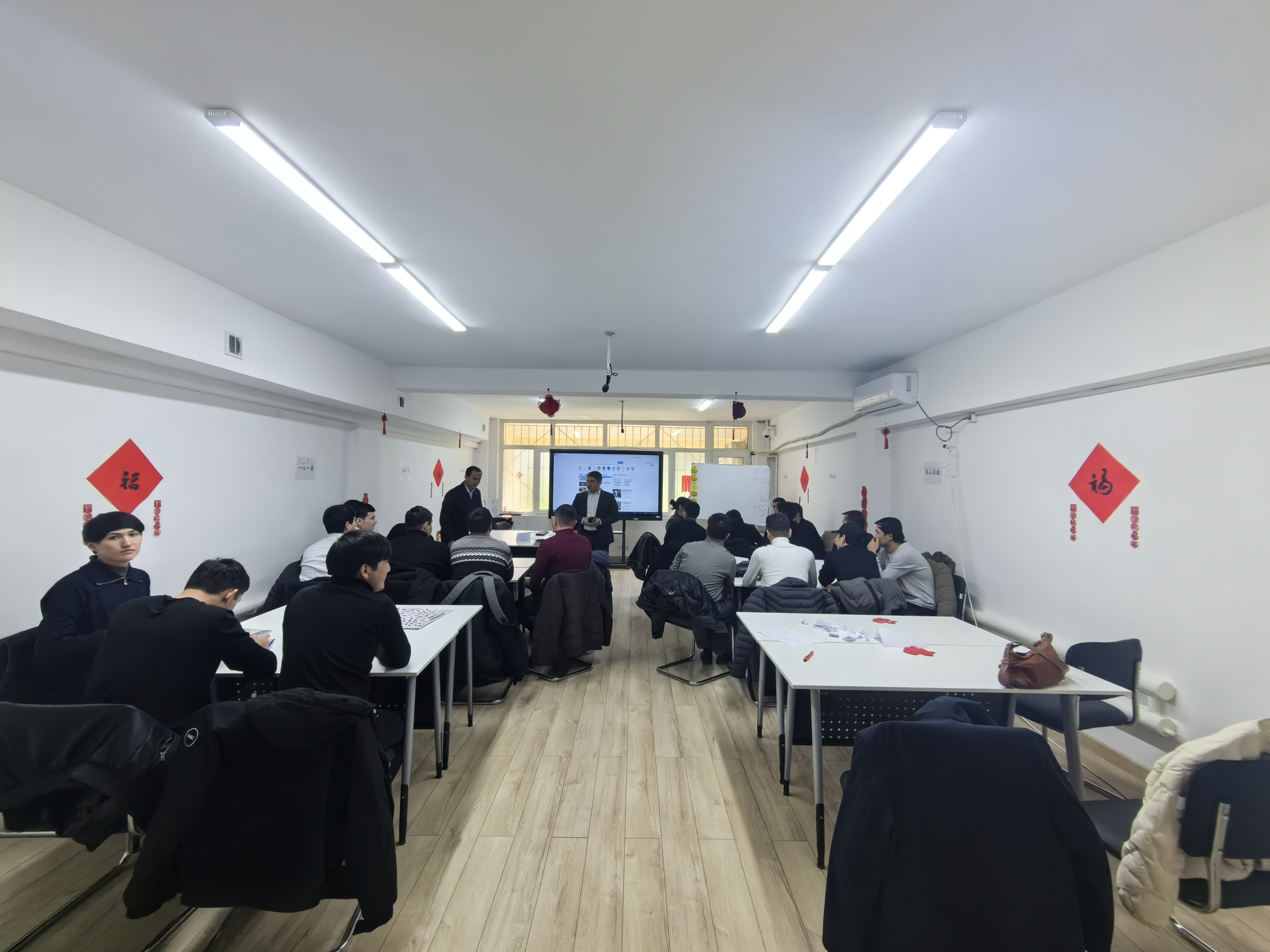
Adhering to the principles of classified guidance, precise connection and collaborative linkage, the meeting was carried out simultaneously in groups according to professional directions. Professional supervisors had in-depth exchanges and detailed guidance with students on the training program, course learning, scientific research training, thesis topic selection and other contents. At the meeting, students took turns to introduce their learning achievements over the past year, focusing on reporting the professional knowledge they had mastered, the research fields they were currently concerned about, and the initially proposed graduation thesis topics. Combining disciplinary characteristics and students’ actual situations, each supervisor conducted comments and guidance one by one, put forward specific opinions and suggestions on the refinement of research directions, optimization of thesis topics, cultivation of academic norms and arrangement of subsequent study, helping students further clarify their professional development goals and the progress ideas of graduation theses.
During the meeting, Chinese and Uzbekistan teachers collaborated closely and interacted actively, fully reflecting the institutional advantages of the dual-supervisor-system talent cultivation model at the Tashkent Campus. Chinese supervisors, based on the disciplinary characteristics and talent cultivation requirements of the university, focused on providing guidance on preparation for studying in China, connection of professional courses, and improvement of scientific research capabilities. Uzbekistan teachers, in light of students’ previous learning performance and the actual situation of local cultivation, put forward suggestions on students’ academic foundation, language communication and professional adaptation. The supervisors from both sides participated, judged and guided together, providing more systematic, scientific and targeted support for the subsequent cultivation of students, and further highlighting the distinct characteristics of China-Uzbekistan joint cultivation and collaborative education.
To effectively improve the efficiency of post-meeting connection, the campus assisted students in applying for WeChat accounts, set up a collective WeChat group for the 2025 cohort students and five WeChat groups by professional directions, and organized one-on-one WeChat communication between students and supervisors, ensuring that all teacher-student communication channels are unobstructed and daily contact is efficient and smooth.