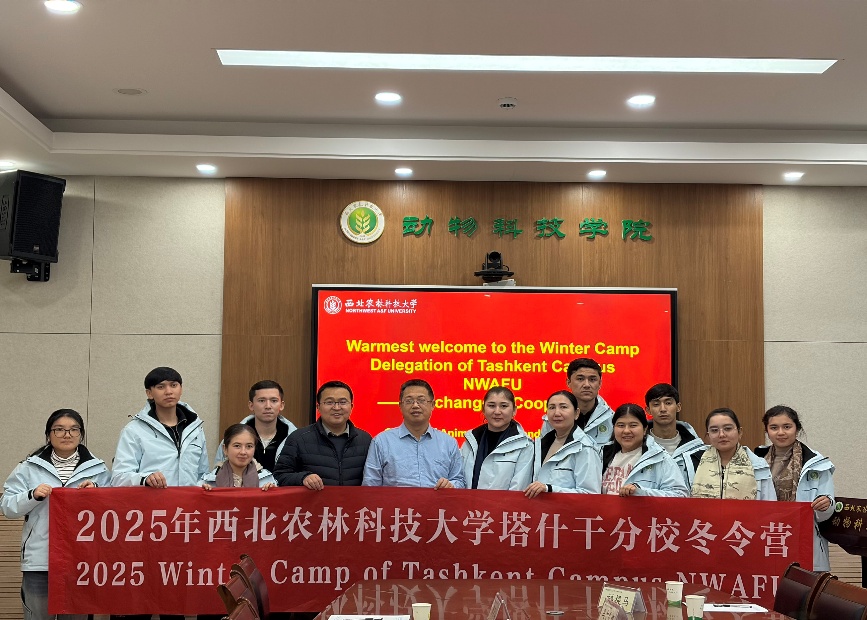
On December 16, the College of Animal Science and Technology welcomed a delegation of teachers and students from the First Winter Camp of the Tashkent Campus in Uzbekistan. During an intensive half-day program, the delegation engaged in an immersive exploration of the complete agricultural science and technology ecosystem—from cutting-edge fundamental research and university–industry collaborative innovation to industrial application and technology transfer—gaining first-hand insight into the innovation capacity and development momentum of Northwest China in the fields of modern animal husbandry, biotechnology, and aquatic sciences.
The Winter Camp itinerary was thoughtfully designed and tightly scheduled, with the aim of presenting a comprehensive overview of the College’s research platforms and industrial landscape within a limited time. At the beginning of the visit, the delegation arrived at the Seed Building, where they toured the Sheep Research Team Laboratory and the Micro-Well Biotechnology Research and Development Platform. These facilities represent the source of innovation in animal genetic breeding and biotechnology, showcasing scholars’ efforts in the exploration, conservation, and utilization of high-quality germplasm resources, as well as the application-oriented exploration of modern biotechnologies in agriculture.
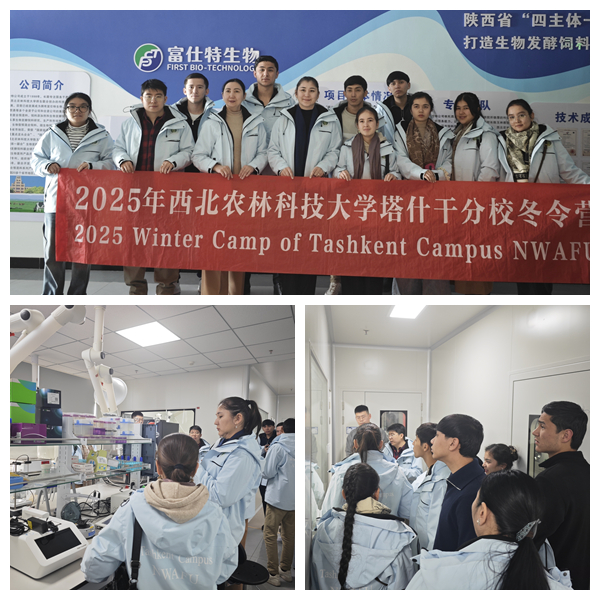
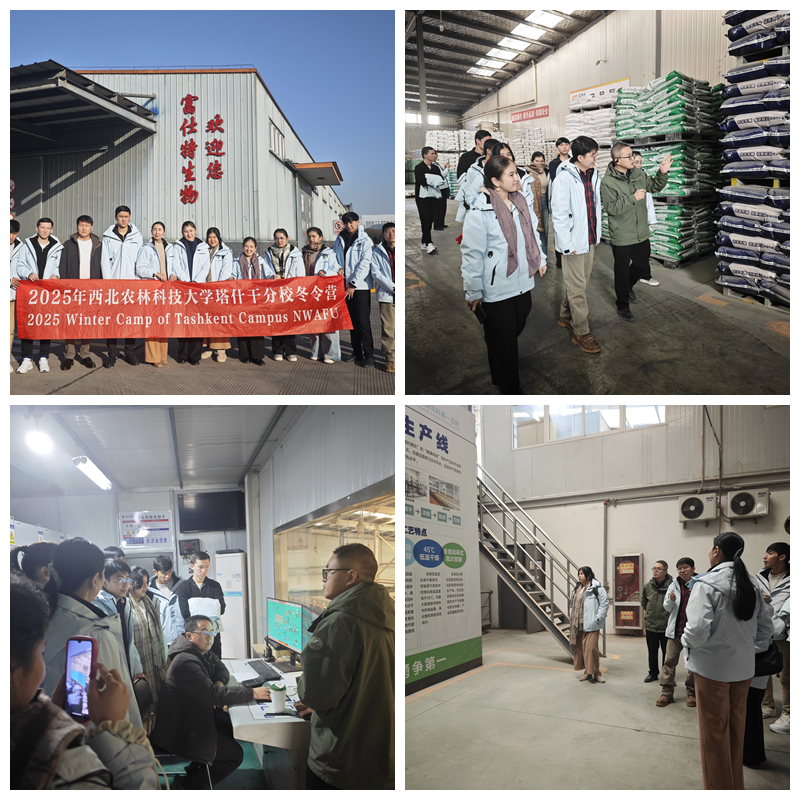
Subsequently, the delegation visited Shaanxi Yangling First Bio-Technology Co., Ltd. for an on-site inspection. As a model of deep integration between universities and industry, First Bio-Technology Co., Ltd. leverages the strong scientific research capacity of Northwest A&F University and has established a research and development team led by Vice President Chen Yulin, bringing together several chief experts of provincial industrial systems in Shaanxi, including Yao Junhu, Jin Yaping, and Zhang Enping. Guided by the company’s management, the delegation toured the production workshops and received detailed explanations of the overall layout, production processes, and core operational principles. This visit enabled the teachers and students to clearly see how cutting-edge technologies are transformed, through market-oriented mechanisms, into productive forces that address practical challenges in the livestock industry.
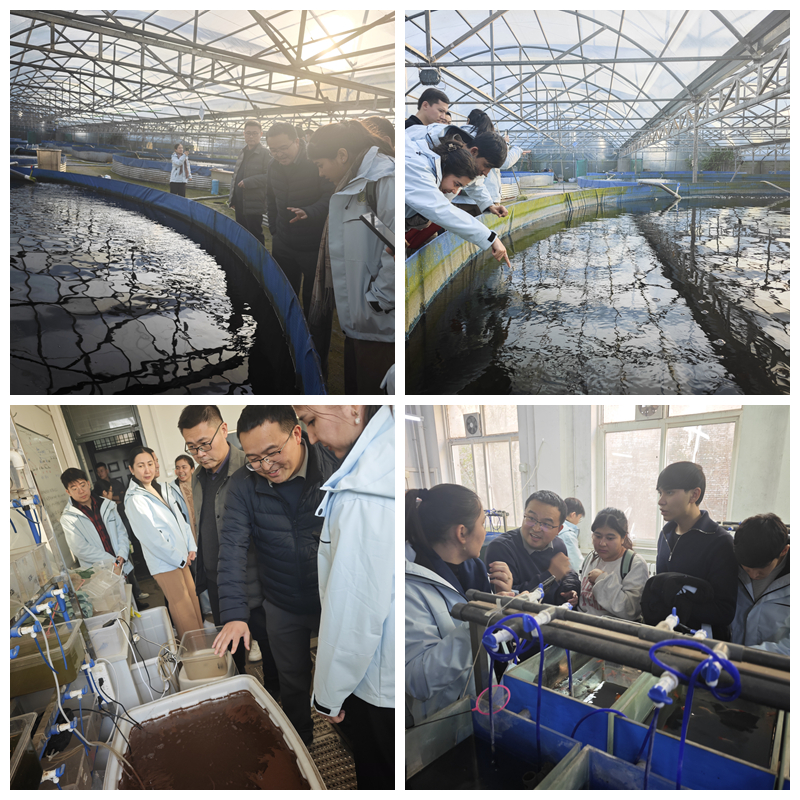
At the third stop, the delegation visited the Aquaculture Laboratory of the College of Animal Science and Technology. The laboratory focuses primarily on the characteristic fishery resources of Northwest China and the Han River Basin. Its research spans multiple areas, including the development of suitable culture models, aquatic feed and pharmaceutical development, breeding of high-quality and distinctive new varieties, and protection of aquatic ecological environments, all aimed at promoting regional economic development in Shaanxi and advancing high-level disciplinary development. The delegation showed strong interest in the laboratory’s innovative practices in integrating specialized aquaculture research with industry in inland regions.
In the final segment of the itinerary, the delegation returned to the College of Animal Science and Technology for a cordial forum with the College’s leadership, experts, and professors. The exchange began with a brief overview of the College’s development, research system, and talent cultivation models, followed by in-depth discussions on topics of mutual interest identified during the visit.
The forum brought the visit to a successful conclusion and laid a solid foundation for future expansion of inter-university and university–industry international cooperation.